My First Hackathon at Watcha 2026
I spent 24–25 October at Watcha 2026 in Hangzhou’s Longwu tea-town halls. The official line was “watch creation happen.” For me it was simpler: walk the whole hall, try products I had only followed online, sit in a few talks — and finally enter a hackathon.
I had already been following a lot of AI products on the Watcha community — software as much as hardware. On site I spent a lot of that time with OPCs (one-person companies) and with promo people from some of the companies: what they claimed as an advantage, how the product actually works, and how they make money. I wanted those pieces so I could move them onto things I want to build.


Two days in the hall
The expo pass covered 100+ booths across six tracks. I walked the whole hall.
I was not hunting for a particular brand. Alipay’s AI glasses and Ascentiz’s powered exoskeleton happened to be there, so I tried them. On the glasses I used the nod-to-pay feature. The exo has some weight; after I ran a lap, I could still feel my thighs being lifted — that leftover inertia. Around them sat a lot of other AI software and hardware — docks, wearables, agent demos, things that want to live on a desk or in a pocket. I also walked out with more gifts than I planned: a Watcha blind-box, Lenovo’s Xiangbangbang mouse, Xiaomi’s HachimoDock, and a pile of smaller bits.
I sat the on-site AI exam as well: 50 questions. I scored 96 / 100 and got the AI Pioneer certificate.
On the morning of the 25th I went to the Alipay AI Pay forum. That is where I learned how an AI product can take in revenue more easily. I also went to the Founder AMA. I still came away with a lot from listening.
The afternoon was the part I had been waiting for.
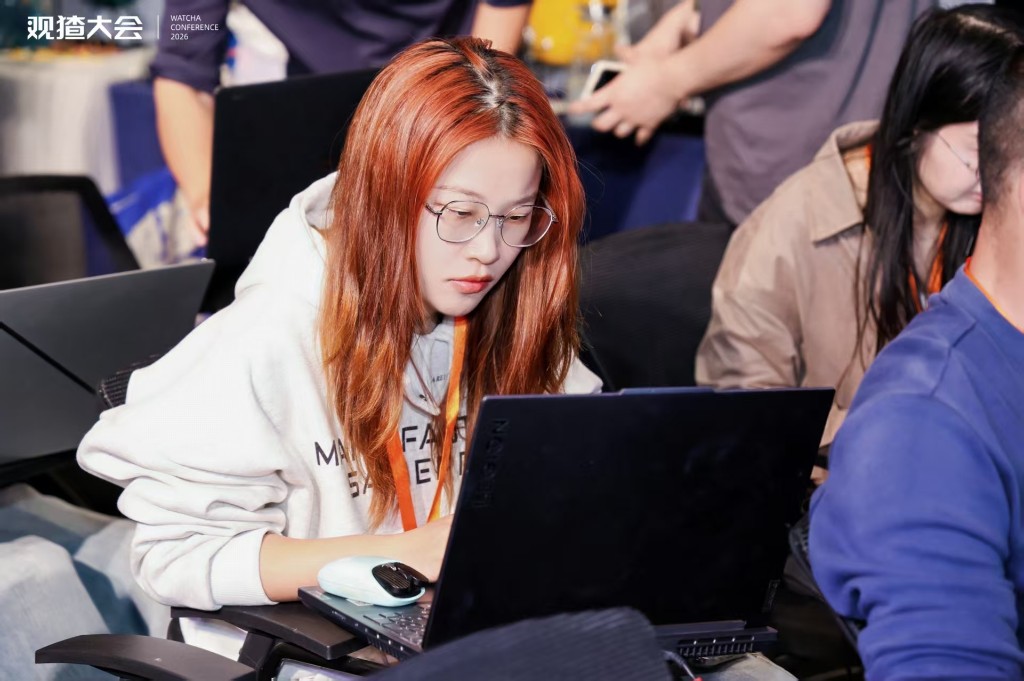
Ninety minutes, first hackathon
The Tianxi hackathon asked everyone to build a Skill, upload it to Lenovo’s developer platform, and then pitch. Official time: 90 minutes. You got five minutes on stage.
I wanted to build a file auto-organizer. I like organizing. For people who run events, sorting files is important and tedious. The idea was also simple enough to ship under a time limit. I planned to use Cursor, the stack I already live in.
The hall Wi-Fi disagreed.
Cursor would not stay usable, so I downloaded Tianxi AI on the spot. They wanted to promote it.
I lost the thread twice.
The first time, I had just installed the app and started building. I was close to a working Skill. Then a login wall popped up. After I signed in, the history was empty. The conversation I had been living in was gone.
The second time, I rebuilt enough of the work to keep going — and then noticed the default chat mode cannot call tools. I switched to Super mode. That opened a new session. The old one was still there, somewhere else. I stayed in the Super mode window and finished the Skill there.
I almost quit. I submitted anyway, and I still signed up to pitch.
What I actually built
The Skill is auto-organizer: an Agent Skill that sorts a local folder by topic.
The pain is ordinary. A desktop or a grant folder fills up — PDFs, photos, scans, slides — and “I will tidy this later” never happens. Auto-organizer is not a magic classifier in one click. The scripts scan, move, write a report, and roll back. The Agent reads filenames and file text, proposes a folder tree, and only moves files after you say yes.
Defaults I care about:
- dry-run first; nothing moves without a confirm
- stay inside the folder you named
- never delete; never overwrite (it adds
(2)) - skip
.git, dotfiles, and.env - identical files (SHA-256) get flagged; one copy stays in the topic folder, the rest go to a duplicates bin
- optional PDF text and Tesseract OCR if those tools are on the machine
That is a personal-office Skill, which matched the hackathon track. The on-site version was rough. What is on GitHub now is the version I cleaned up after I got home.
Five minutes, a Feishu doc
Other people who pitched had also hit bugs. They still showed up with a Skill and a deck — PPT or a small HTML page, mostly made with AI, and they looked polished. I tried to make slides in Tianxi AI. It was too slow. I gave up and pitched from a Feishu doc.
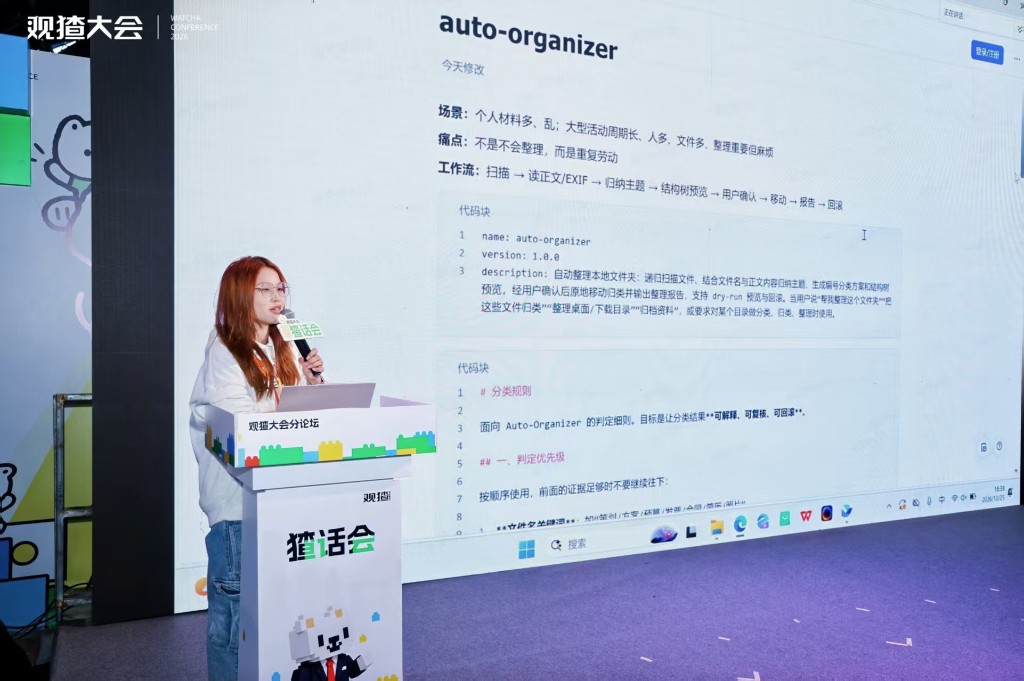
The room voted. I did not place. That was the expected ending for a first hackathon pitched from a document.
I posted the stage photo to WeChat Moments anyway. A second-year graduate student asked if there was a GitHub link — she said the idea would actually help her. That question is why I finished the repo instead of leaving it as a 90-minute draft.
If you also have a messy folder and an Agent that can load Skills, the package is here: github.com/Universe-ustc/auto-organizer.
I did not win. I did leave with a first hackathon, a Skill I still use, and a clearer sense of how strong other people’s creativity and hands-on work can be.